
Pega Diferencial


%
Differential sticking is the only mechanism that occurs after a stationary period and results in no circulating pressure increase. If a pressure increase is seen after being stationary either mobile solids (cuttings, cavings, sagging HGS) or wellbore deformation (ductile wellbore failure in a salt / anhydrite) is restricting circulation. There is a possibility that both differential sticking and a pack-off could have occurred together. Differential sticking occurs as a result of pressure differential between the mud hydrostatic and the formation pore pressure and acts across the area of contact between the drill string / BHA and the formation. This means that a relatively low differential pressure applied over a large working area can be just as effective in sticking the pipe as can a high differential pressure applied over a small area. For differential sticking to occur, five conditions need to be present simultaneously, which can be summarized by the STOPS acronym: Stationary pipe; Thick & permeable filter cake; Overbalance; Permeable formation; Surface contact.
More information on this sticking mechanism, the STOPS risk reduction principles and the recommended remedial actions can be obtained by downloading your stuck pipe report at the bottom of this page.
Wellbore Geometry

%
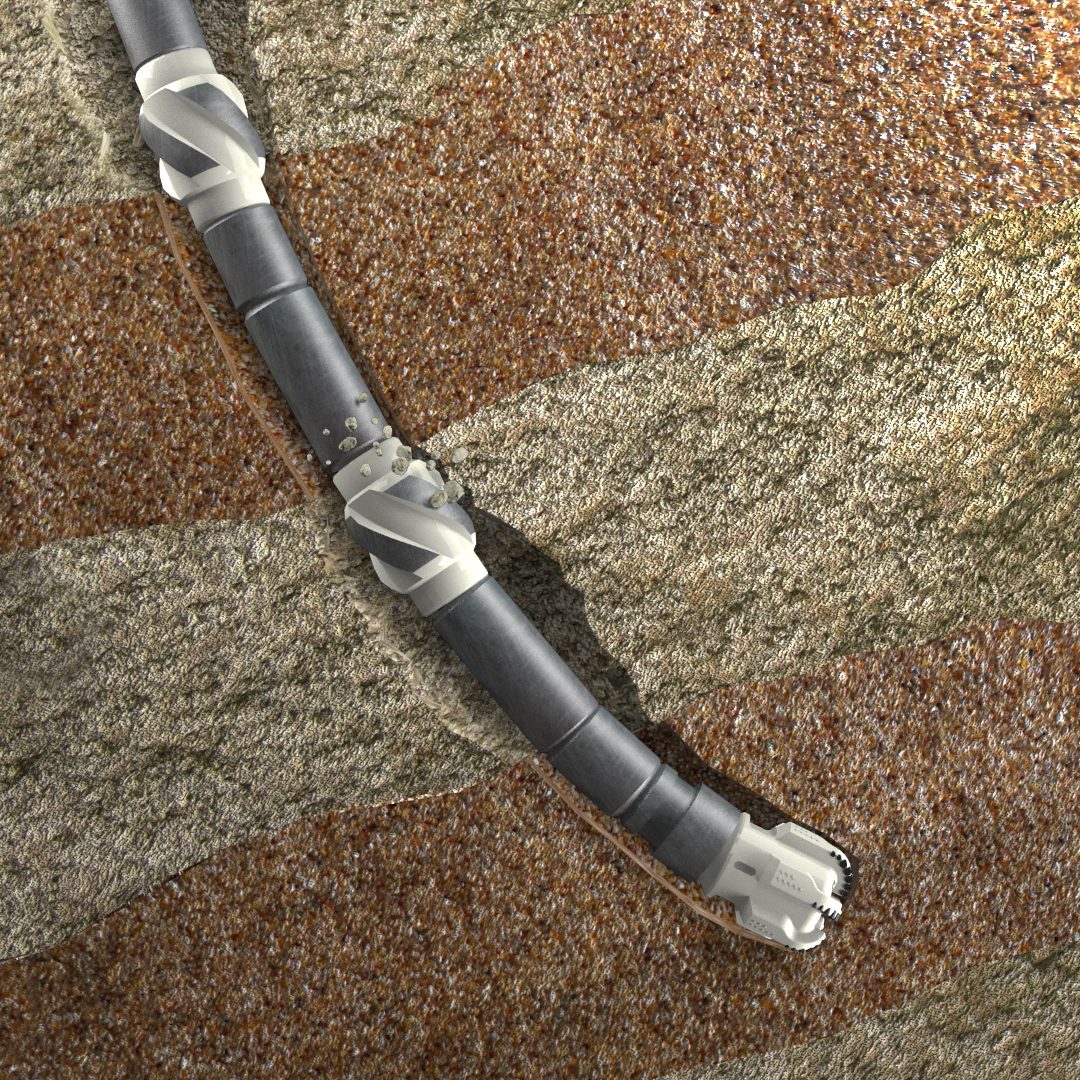
This category of stuck pipe mechanism covers a range of sub-causes, with the common factor being the mechanical interaction between the borehole and the BHA. The exact mechanism will be specific to each stuck pipe event, but key sub-categories are: under-gauge hole, ledges, high doglegs / tortuosity, key-seating.
More information on this sticking mechanism and the recommended remedials actions can be obtained by downloading your stuck pipe report at the bottom of this page.
Pack-off / Bridge


%
This category of stuck pipe mechanism covers a range of sub-causes, with the common factor being that mobile solids become hydraulically packed between the borehole wall and the drillstring or BHA, creating a blockage in the annulus which can prevent or restrict both string movement and circulation. The exact sub-cause will be specific to each stuck pipe event; however, some common examples are unconsolidated formation, wellbore instability and cuttings beds. In high-angle hole sections, the pack off mechanism is more likely to occur during tripping operations – particularly when poor tripping or back-reaming practices are employed. Other common risk factors include back-reaming through known over-gauge / gauge transition zones and using BHAs with a poor flow-by area.
More information on this sticking mechanism and the recommended remedial actions can be obtained by downloading your stuck pipe report at the bottom of this page.
Download your results now, with some helpful tips from Merlin
Enter your details to receive your results via email with additional hole cleaning tips


